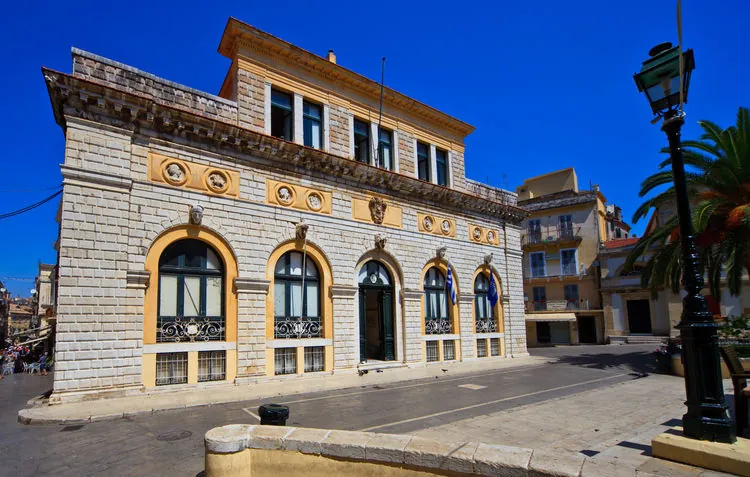
Old Town Hall Square
This was the place for state ceremonies, pomp and circumstance, in the time of Venetian rule. The square is enclosed by four symbolic buildings as witnesses to

This was the place for state ceremonies, pomp and circumstance, in the time of Venetian rule. The square is enclosed by four symbolic buildings as witnesses to
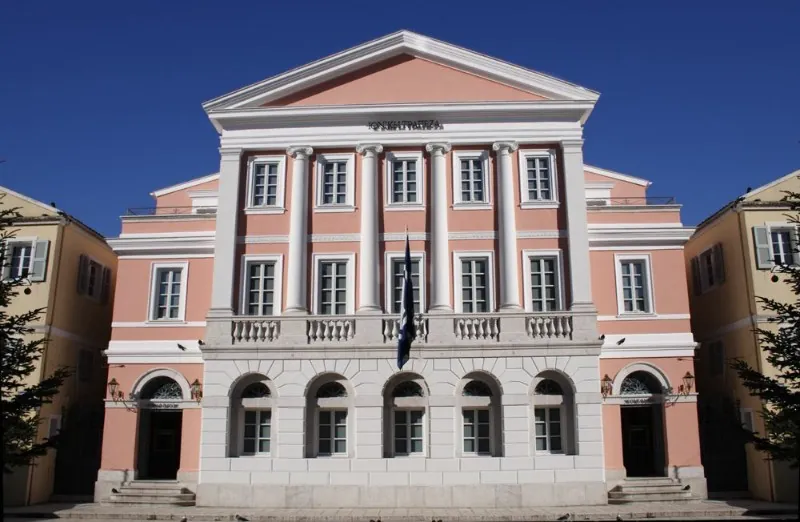
Built about 1846 on one of the few large squares in the centre of the town, formerly called Sternon Square. An important works by the architect I. Chronis. The
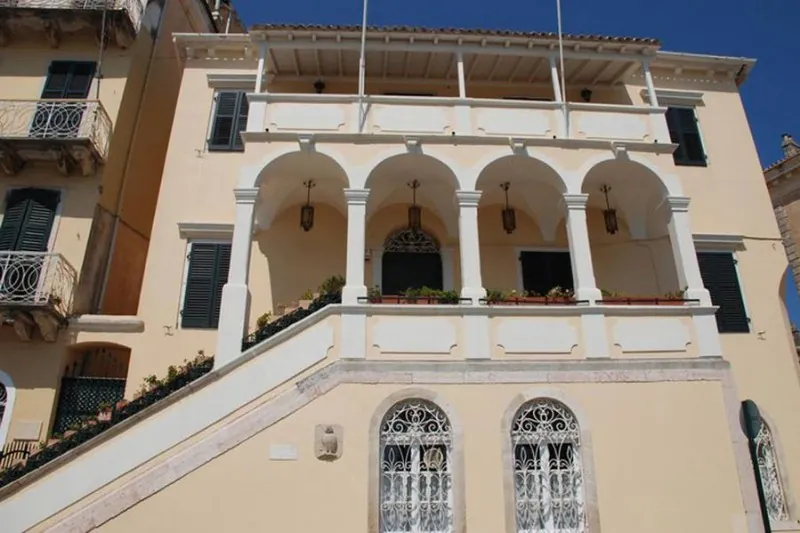
This building, which houses the Corfu Reading Society, one of the earliest cultural foundations in modern Greece (founded in 1836), stands almost directly oppos
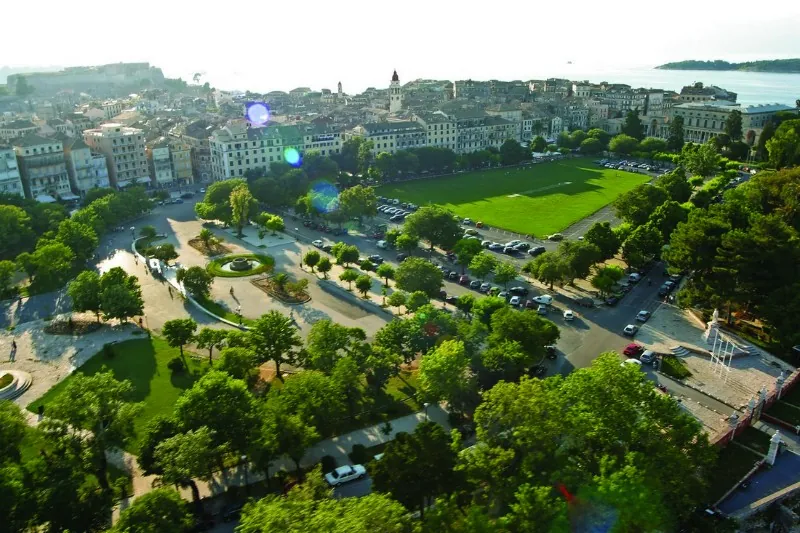
The great square of Corfu Town nowadays owes its name to the Venetian word spianata, a large open space. That was the requirement of Venetian defensive policy:
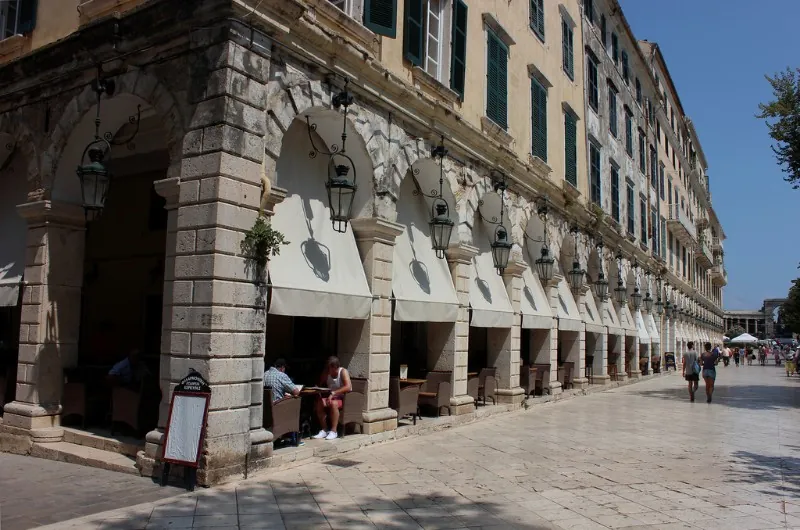
Residential building complex on the Spianada, which was begun under the French empire and forms the main testimony to the French presence on Corfu. The rhythmic
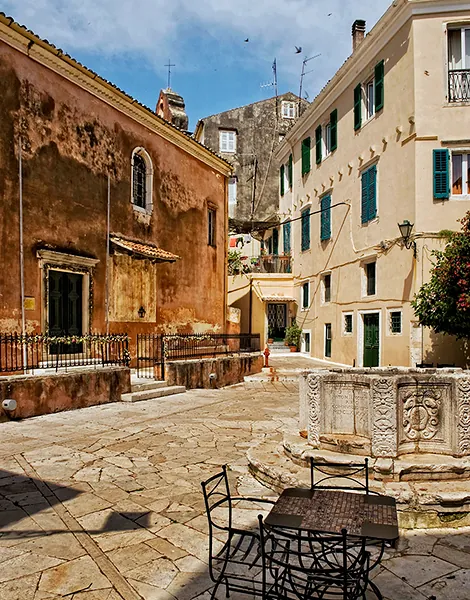
This most picturesque little square in town feels like a theatre scene within the densely built Campiello quarter. The cistern at its centre, bearing sculpted s
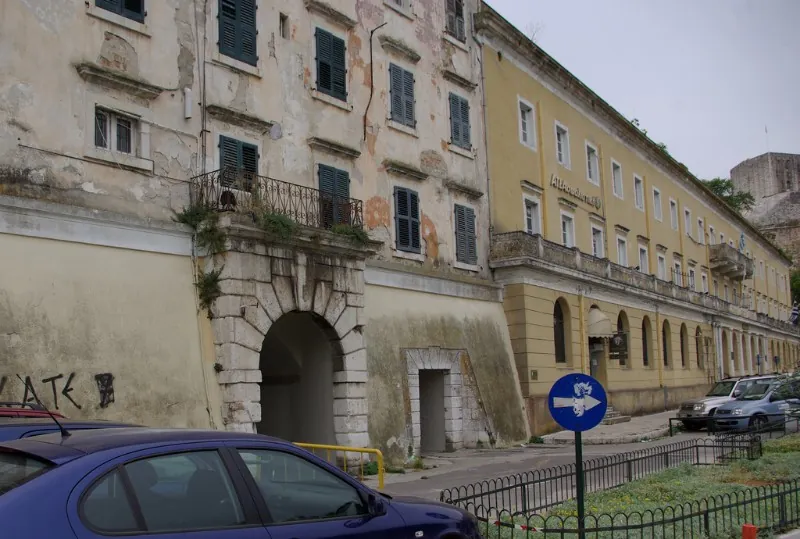
The gate leading to the harbour. It survives incorporated into the Spilia Barracks, a building that has undergone much modification.
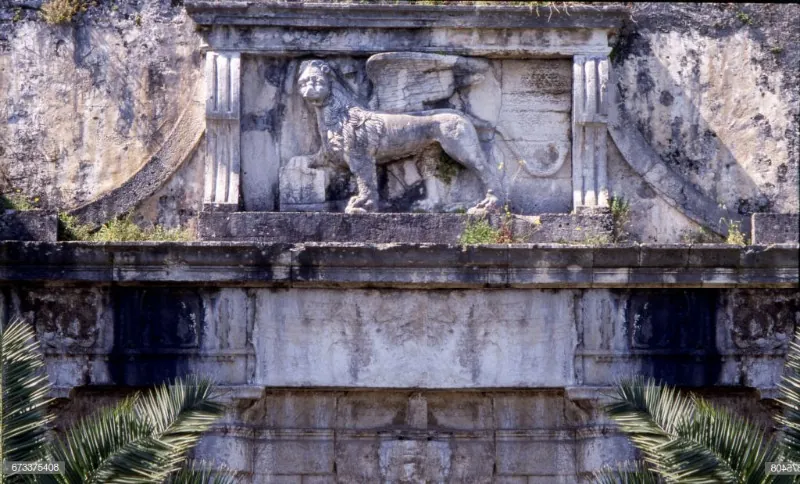
The main entrance to the New Fortress is a highly monumental structure (columns with Tuscan-Doric elements) by Ferrante Vitelli, a great military architect who
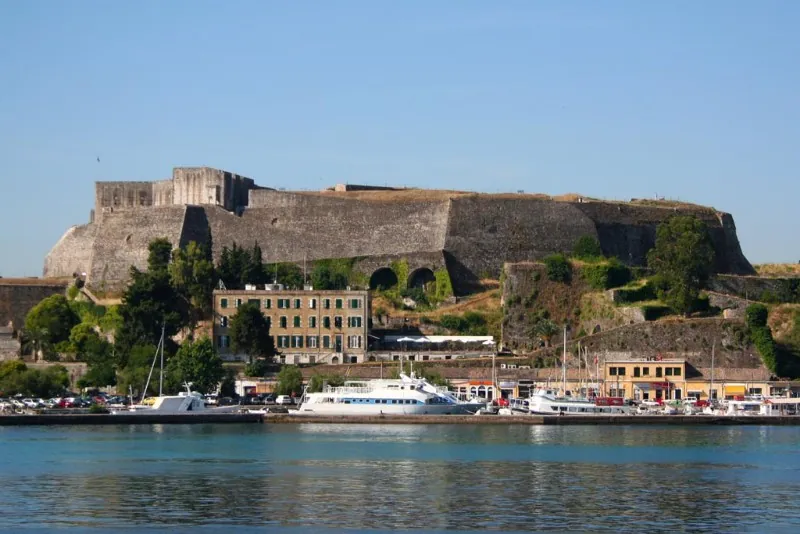
The Venetian authorities planned and built the New Fortress on St Mark’s Hill, to the north-west of town, on the insistent requests of Corfiots for added defens
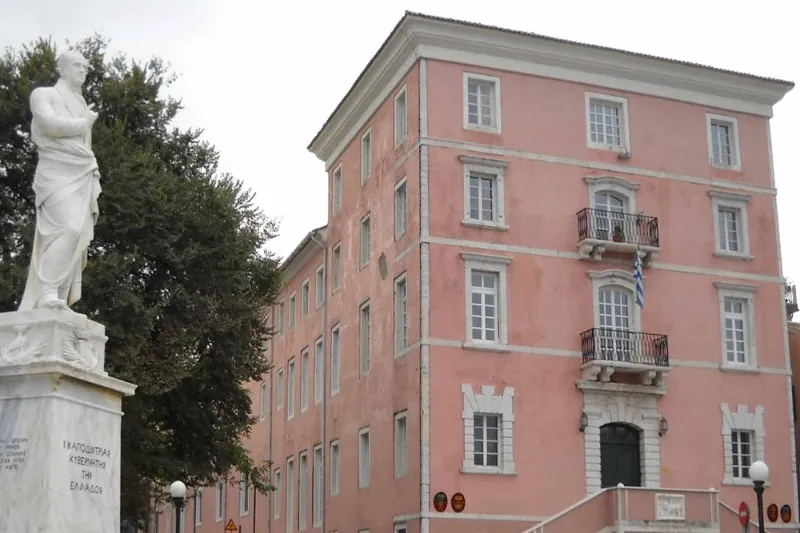
The great building of the Venetian barracks housed the Ionian Academy from 1840 onwards. This building was originally designed to house barracks, in combination
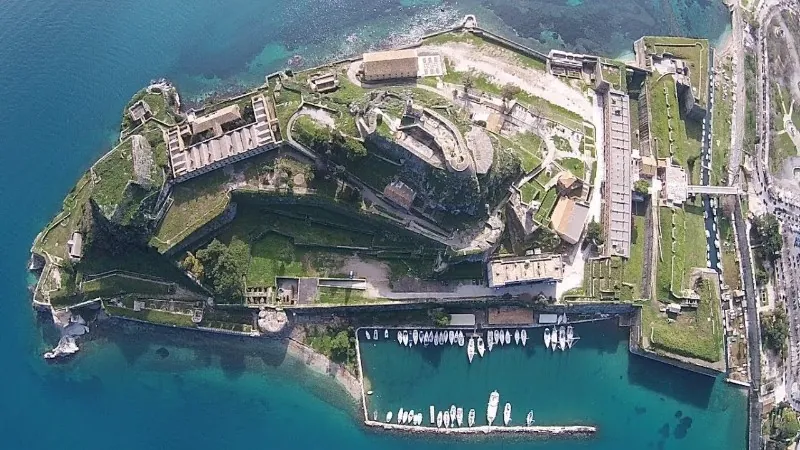
A headland jutting out into the waves, where between its two peaks the medieval town of Corypho developed (hence Corfu today), was to be transformed by engineer
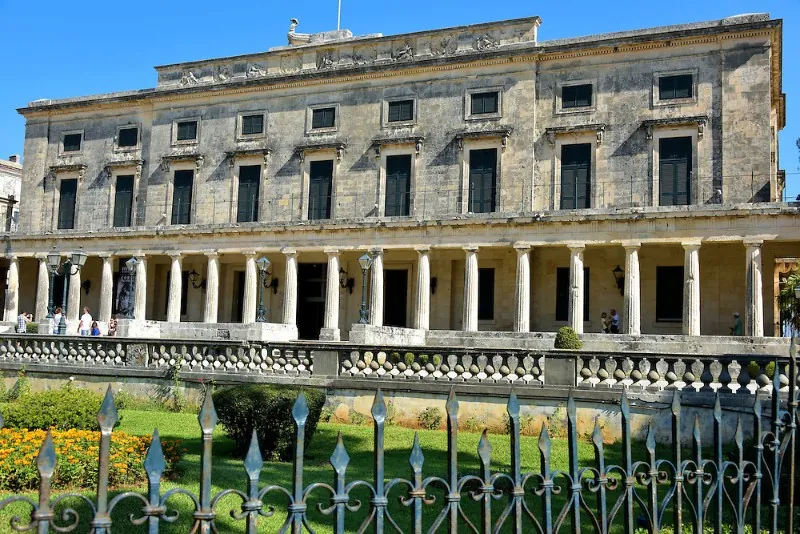
This most representative neoclassical structure in Corfu Town was constructed by the British, then in possession of the Ionian islands, and formally presented t
This was the place for state ceremonies, pomp and circumstance, in the time of Venetian rule. The square is enclosed by four symbolic buildings as witnesses to
Built about 1846 on one of the few large squares in the centre of the town, formerly called Sternon Square. An important works by the architect I. Chronis. The
This building, which houses the Corfu Reading Society, one of the earliest cultural foundations in modern Greece (founded in 1836), stands almost directly oppos
The great square of Corfu Town nowadays owes its name to the Venetian word spianata, a large open space. That was the requirement of Venetian defensive policy:
Residential building complex on the Spianada, which was begun under the French empire and forms the main testimony to the French presence on Corfu. The rhythmic
This most picturesque little square in town feels like a theatre scene within the densely built Campiello quarter. The cistern at its centre, bearing sculpted s
The gate leading to the harbour. It survives incorporated into the Spilia Barracks, a building that has undergone much modification.
The main entrance to the New Fortress is a highly monumental structure (columns with Tuscan-Doric elements) by Ferrante Vitelli, a great military architect who
The Venetian authorities planned and built the New Fortress on St Mark’s Hill, to the north-west of town, on the insistent requests of Corfiots for added defens
The great building of the Venetian barracks housed the Ionian Academy from 1840 onwards. This building was originally designed to house barracks, in combination
A headland jutting out into the waves, where between its two peaks the medieval town of Corypho developed (hence Corfu today), was to be transformed by engineer
This most representative neoclassical structure in Corfu Town was constructed by the British, then in possession of the Ionian islands, and formally presented t
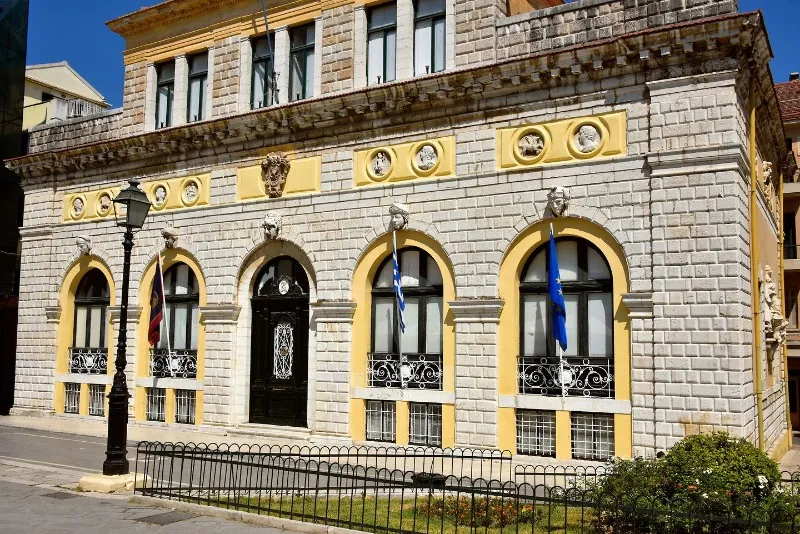
The Loggia (today’s San Giacomo) was initially built as a lodge for the assemblies of local nobles.Constructed between 1663 and 1693 with Sinies stone, the only
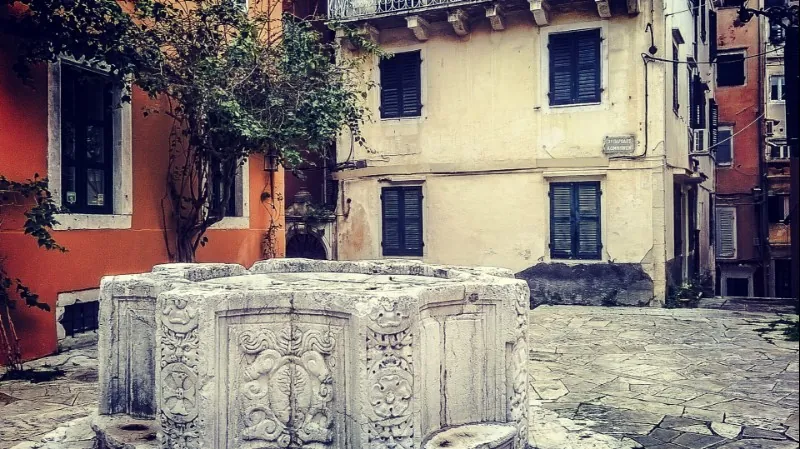
Very elegant well-head with relief decoration. Presented to the Community by Antonios Kokkinis, it stands at the centre of one of the most beautiful squares in
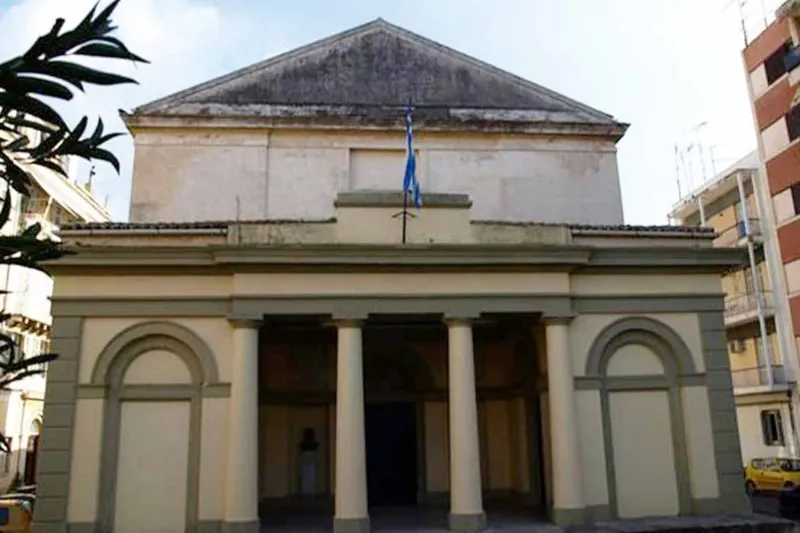
Built by the Corfiot architect I. Chronis. Its neoclassical style facade with the Tuscan-Doric porch recalls the facades of the wings of the Commissioner’s Pala
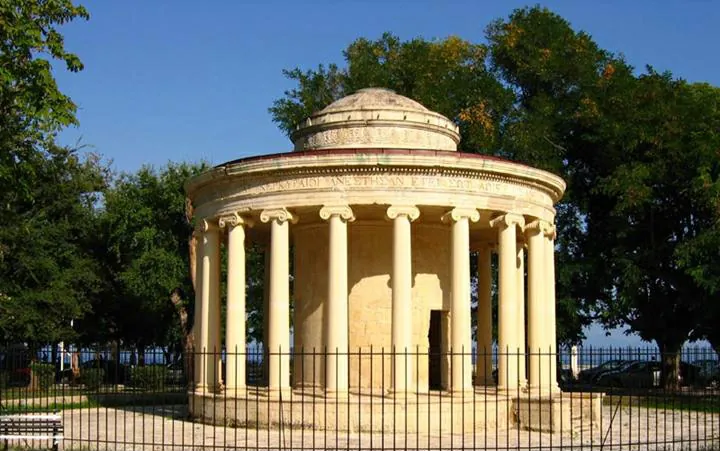
Small circular monument (rotunda) on the Spianada, in the type of a circular monopteral Ionic temple, built in honour of the first High Commissioner of Corfu, S
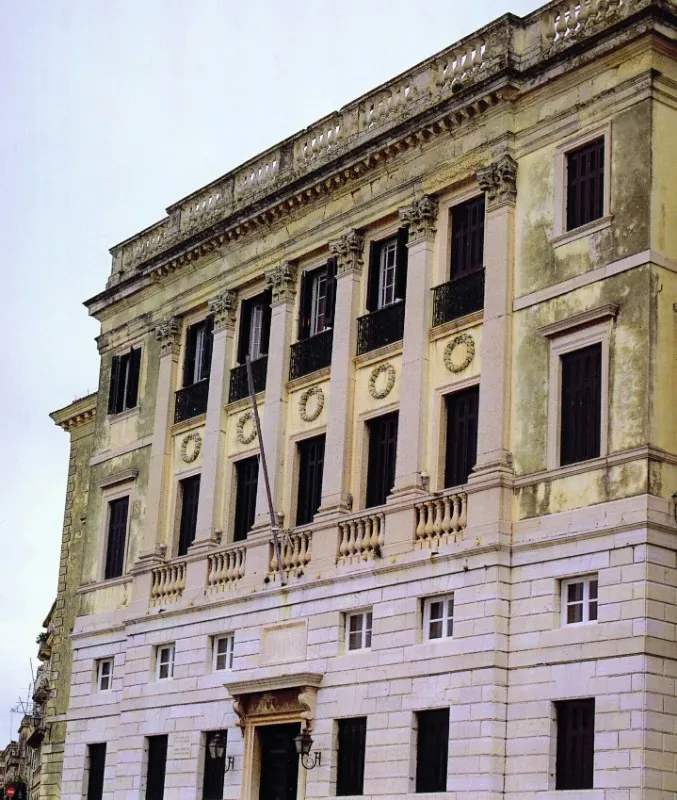
It was built about 1832 on the site of an earlier mansion owned by the family, in which the first prime minister of the modern Greek state, Ioannis Kapodistrias